Artisan story
Vibrant Otomí Textiles
In the mountains of Tenango de Doria, Hidalgo, Otomí artisans create some of Mexico's most recognizable embroidered textiles. Known as tenangos, these colorful pieces feature intricate designs of animals, plants, and other figures inspired by the region's natural surroundings, cultural traditions, and everyday life.
The tradition of Tenango embroidery
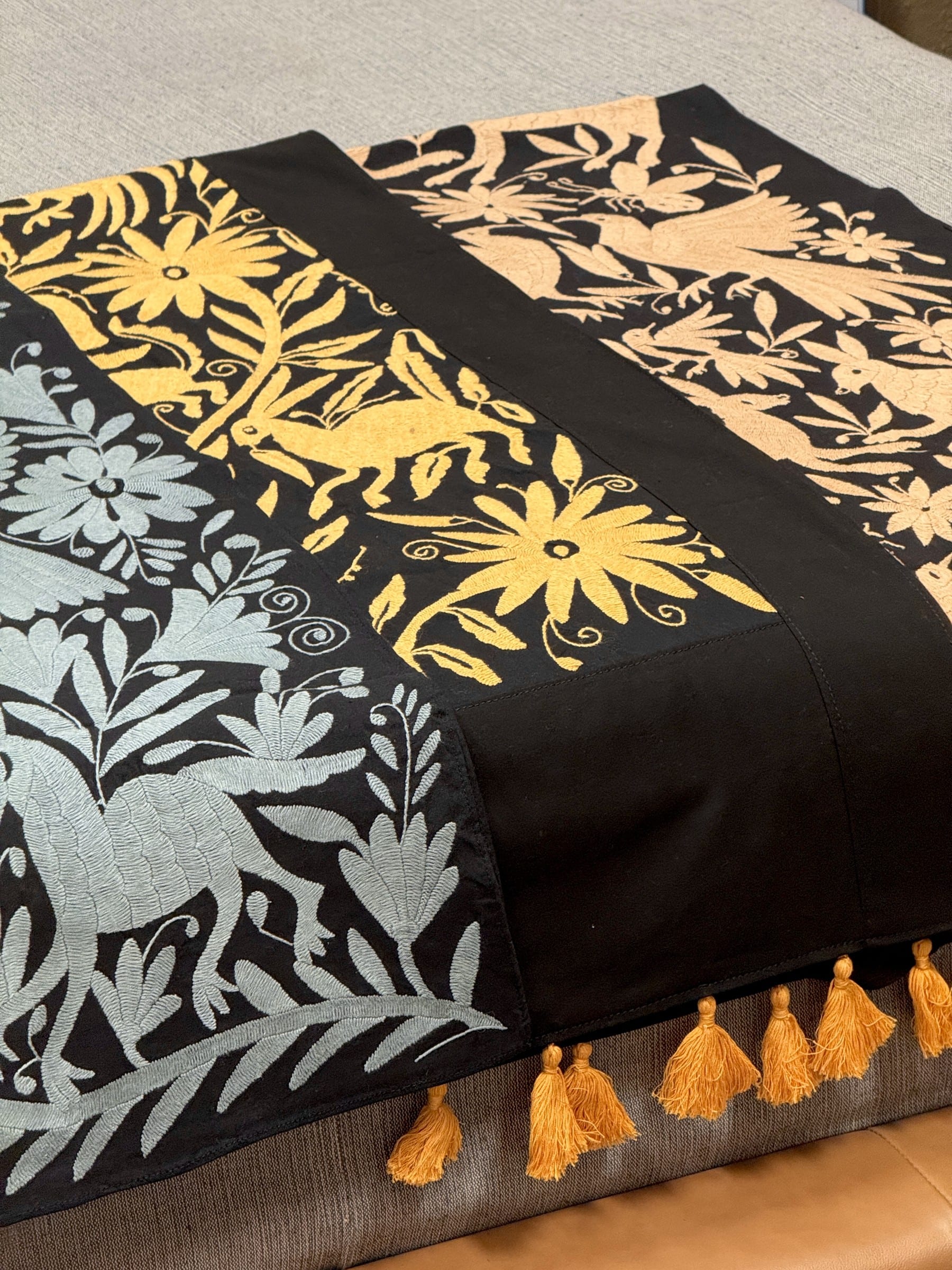
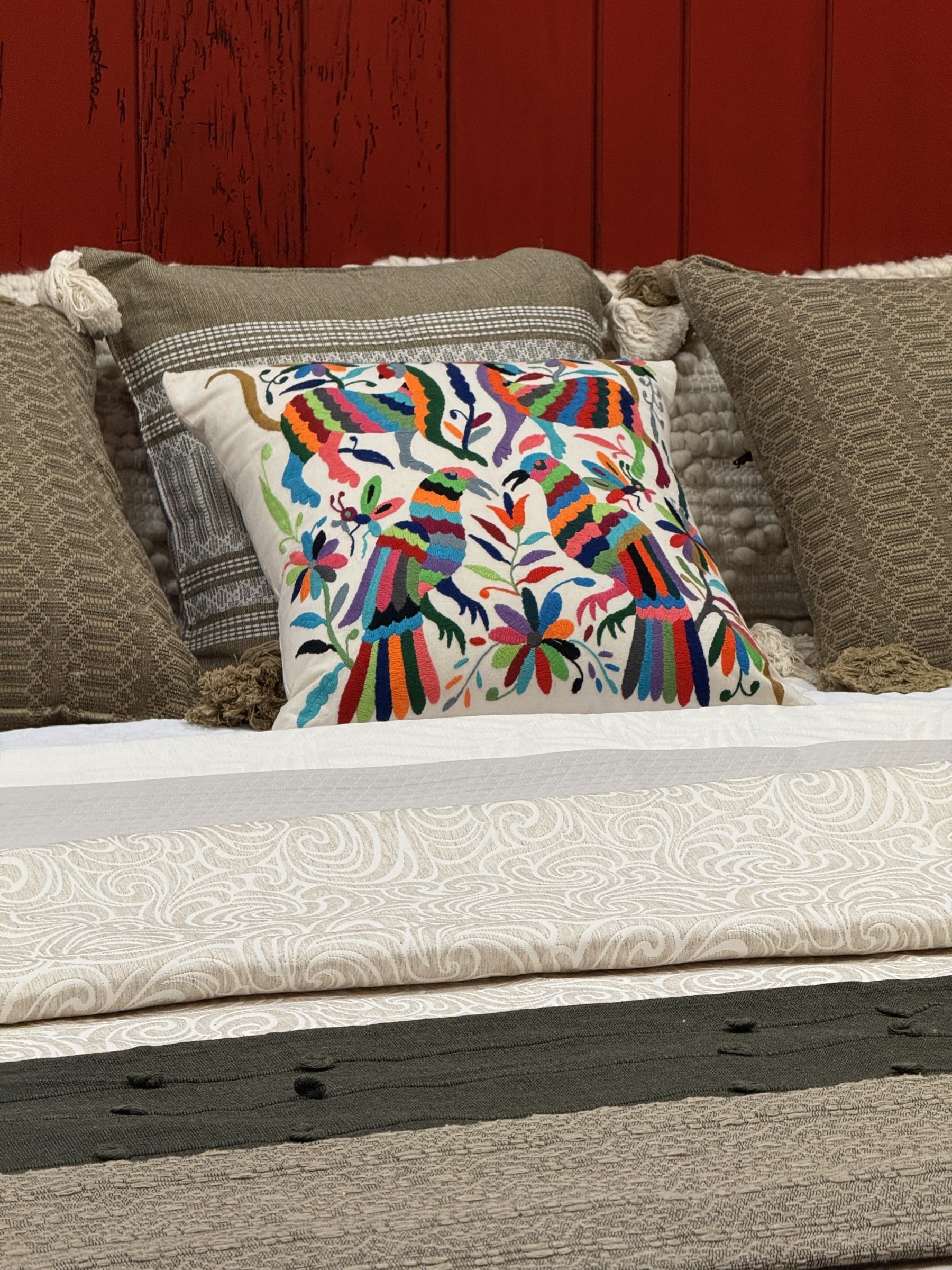
Each textile is embroidered by hand, with designs ranging from brightly colored compositions to more understated patterns worked in a single color.
The Otomí are one of Mexico's Indigenous peoples, with communities throughout central Mexico and a rich history of textile production. In Tenango de Doria, embroidery has become an especially important part of the community's cultural and artistic identity.
The distinctive style of embroidery we know today as tenango emerged during the mid-20th century, drawing on longstanding artistic traditions and imagery associated with the region. Some accounts trace the designs to ancient cave paintings found nearby, while others highlight their connections to local wildlife, agricultural life, ceremonies, and traditional stories.
Deer, birds, rabbits, flowers, and other natural motifs are common, often arranged in elaborate compositions that fill the fabric. While some designs carry cultural or symbolic meanings, others simply reflect the animals, plants, and scenes familiar to the artisans who create them.
An intricate process, completed by hand
Creating a tenango begins with a design drawn onto fabric, traditionally a cotton cloth known as manta. Artisans then fill the outlined figures with closely worked embroidery stitches, carefully following the shapes and details of the original drawing.
Depending on the size and complexity of the design, completing a single textile can require many hours of work. Larger pieces, particularly those with densely embroidered patterns, can take considerably longer.
One of the distinctive qualities of hand-embroidered tenangos is the texture created by the stitching. The designs have a slightly raised surface, and each piece reflects the individual technique of the artisan who made it. Small variations in the embroidery are a natural part of the process.
Color and design
Although tenangos are best known for their vibrant colors, the tradition includes a wide variety of styles. Some textiles combine many different thread colors in a single composition, while others use just one or two colors for a more restrained design.
Our collection includes decorative pillows, pillow shams, and table and bed runners featuring traditional Otomí embroidery. The variety of patterns and color combinations makes these textiles easy to incorporate into different interiors, whether as a colorful focal point or a subtle addition to an existing arrangement.
We especially appreciate how much detail goes into each piece. From the initial drawings to the finished embroidery, every step reflects the time, patience, and skill involved in this tradition.
Discover Otomí textiles at Casa Bonita
For more than 25 years, we've traveled throughout Mexico, building relationships with artisans and discovering the remarkable variety of crafts produced across the country. Textiles are an important part of our collection, allowing us to share traditional techniques and designs from different regions of Mexico.
Our Otomí textiles can be found at our Los Cabos showroom, where you can explore the different patterns, colors, and embroidery styles in person.
Our collection is constantly evolving as new pieces arrive. If you're looking for a particular color, size, or design, get in touch and we'll be happy to share what's currently available or help you find something similar.