Artisan story
Pottery from Huáncito
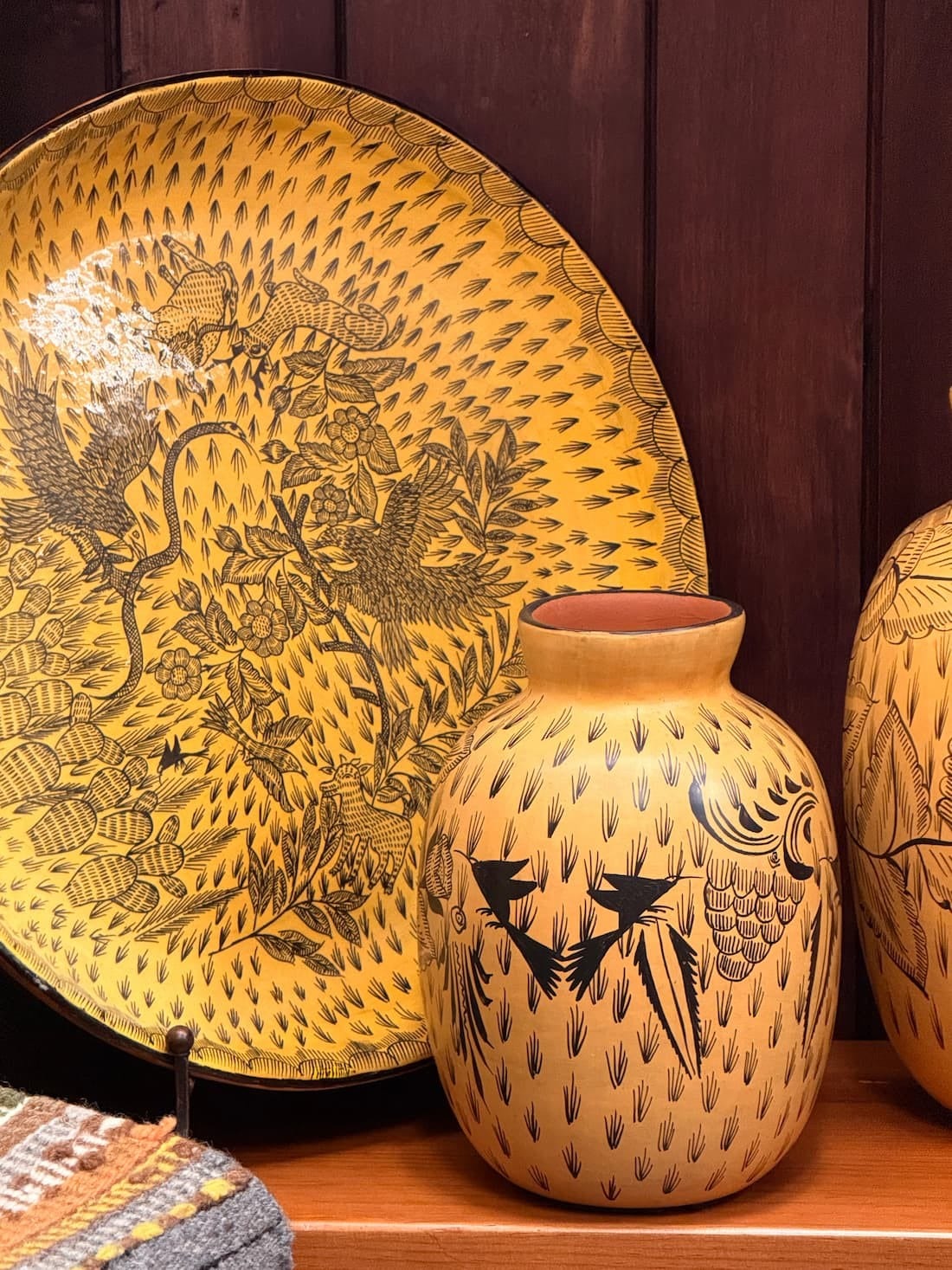
Huáncito pottery is burnished to a satin finish and drawn over in lace-fine line work, in natural mineral pigments.
A Purépecha community known for its clay
Huáncito, in Michoacán, is a Purépecha Indigenous community renowned for its distinctive clay artistry. It is known for a particular surface and a particular kind of drawing.
The work covers platters, vessels, and striking cántaro towers, which are usually the pieces that stop people first. Stacked and tapering, they occupy a room the way a piece of sculpture does.
Burnished to a satin finish
Each piece is burnished to a satiny finish. The light settles softly across the whole vessel, so you see its full shape.
It changes how the surface feels, too. Run a hand over one of these vessels and it is smooth and warm to the touch. They are made to be handled and lived with.
It is also why we suggest handling a piece before choosing it. A photograph gives you the shape and the pattern. Picking one up tells you the rest.
Natural pigments, drawn like lace
Over the burnished ground, the pieces are adorned with delicate, lace-like motifs painted in natural pigments. At a distance the patterning reads as texture, almost as though the surface had been woven. Step in and it separates into individual strokes, laid one beside the next, freehand.
The color comes from natural pigments: deep yellows, soft turquoise, muted greens, and the red of the clay itself.
The colors sit easily alongside wood, plaster and cloth.
Cántaro towers
The cántaro towers stand tall. Stacked in tapering tiers, they read as a single vertical object from across a room and separate into individual vessels as you come closer.
Give one a surface of its own. A tower crowded by lamps, books and frames loses the outline that makes it worth having. On an empty console, in a corner with some height above it, or at the end of a long hall, it does what sculpture does.
The burnished surface helps here, since the light runs down all the tiers at once.
Elena Felix and Bernardina Rivera
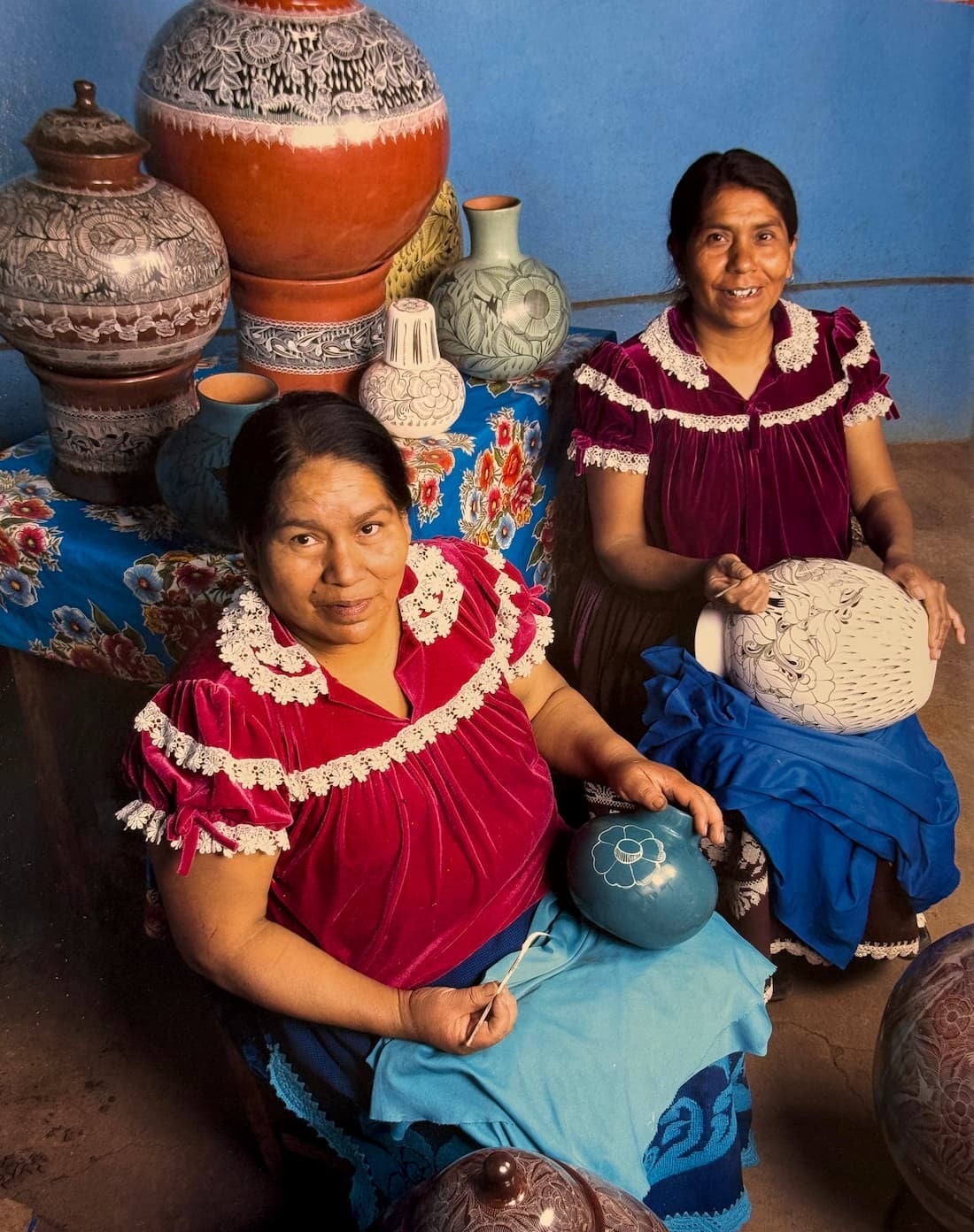
Our collection showcases the work of Elena Felix and Bernardina Rivera, master potters who began their craft at age 12 and went on to win national awards, including recognition as Great Masters of Folk Art by Fomento Cultural Banamex.
They began at twelve, and that is where the steadiness in the fine line work comes from.
In our photograph of the two of them they are seated together with finished work stacked behind and around them, each holding a vessel from underneath.
Choosing a piece
Platters are the easiest place to start. Set flat on a console or propped against a wall, a single burnished platter shows the drawing at full scale. Vessels take a little more thought about height and grouping.
Grouped vessels reward odd numbers and varied heights. Three pieces of different sizes in one palette will sit better than four matched ones in a row. Because the pigments stay in a narrow natural range, pieces bought years apart still agree with each other.
They read well against the materials we build rooms from, which is why they turn up in so many of our settings alongside the furniture we carry. Warm clay and worn wood have always agreed with each other.
Huáncito work is usually on the floor in our Los Cabos showroom, though what is in stock changes as pieces arrive. Availability on any particular platter or vessel is best confirmed directly, so get in touch and we will check for you. More about how we choose the makers we work with is on our story page.